
Basic advice for clients with pets, backyard birds or concerns about sick/dead birds
Bird Flu H5N1 positive events in Australia as of 17th August 2026 – 251.
Advice may change – for the latest official information, visit birdflu.gov.au.
Quick message for clients:
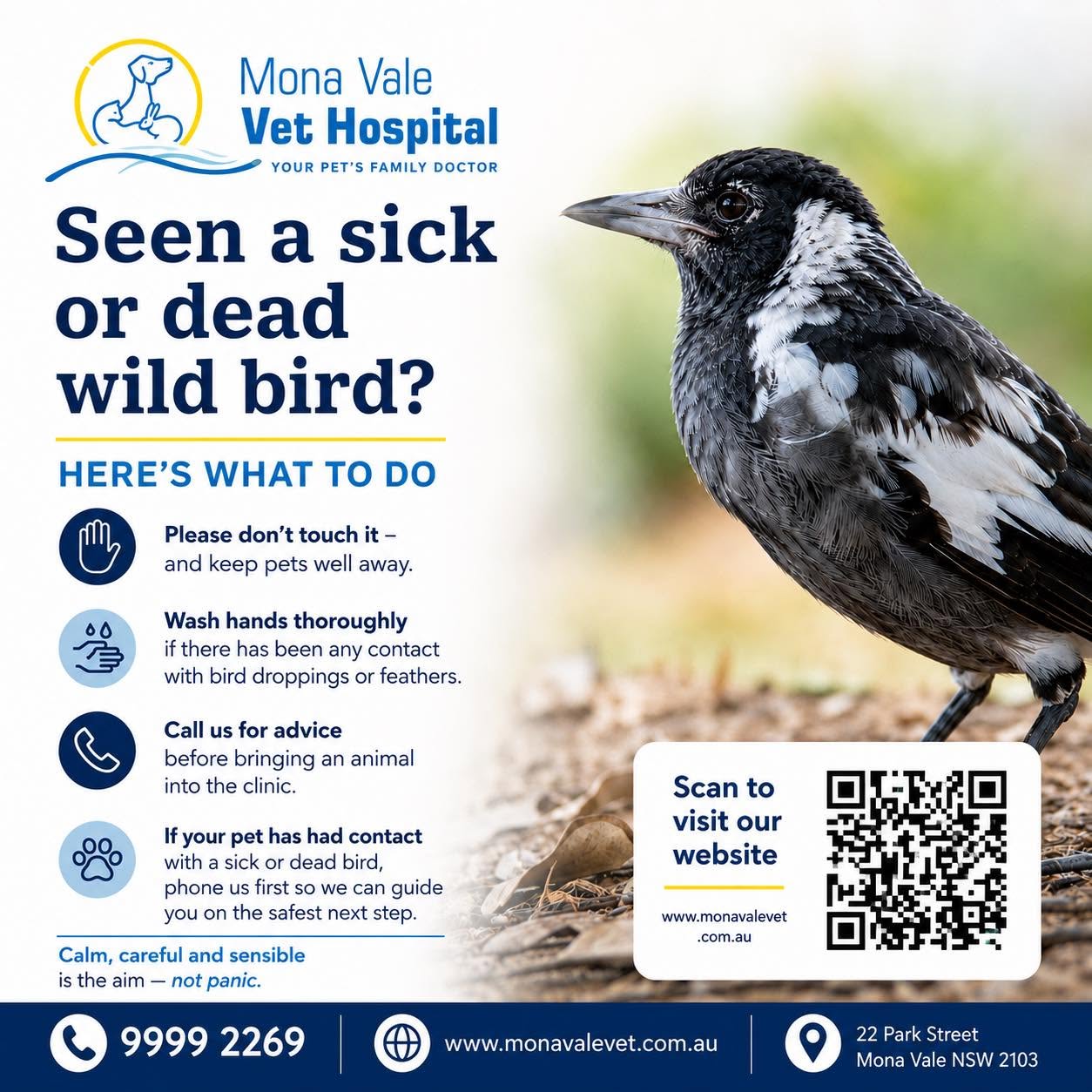
Do not touch sick or dead birds. Keep children and pets away.
Record the location and what you see, take a photo/video from a safe distance if possible, then report it to the Emergency Animal Disease Hotline on 1800 675 888.
Please phone us before bringing any sick bird or exposed pet to the clinic
1. What is bird flu?
Bird flu, also called avian influenza, is caused by influenza A viruses that mainly affect birds. H5N1 is one highly pathogenic strain that can cause severe disease and death in poultry, wild birds and some mammals. Human infection is rare and usually follows close contact with infected birds, animals or contaminated environments.
2. What should I do if I find a sick or dead bird?
☐ Avoid contact. Do not touch, move, bag, wash, bury or bring the bird to the vet unless instructed by biosecurity authorities.
☐ Keep children, dogs, cats and other pets away from the bird and the surrounding area.
☐ Record what you see: location, date/time, species if known, number of affected birds/animals and what signs you noticed.
☐ Take a photo or video from a safe distance if this can be done without getting close.
☐ Report it: call the 24-hour Emergency Animal Disease Hotline on 1800 675 888. In NSW, you can also use the NSW sick/dead wild bird reporting form.
In NSW, definitely report: 5 or more sick/dead wild birds of any species; 2 or more sick/dead backyard poultry or pet birds; or even 1 sick/dead pelican, penguin, bird of prey, black swan or marine mammal.ick Here
3. What signs should I watch for in birds?
- Sudden death, especially more than one bird affected
- Lethargy, weakness, reluctance to walk/eat/drink, droopy or ruffled appearance
- Breathing difficulty, panting, sneezing or nasal discharge
- Swelling of the head or limbs; bruising/discolouration of comb, wattle, feet or skin
- Diarrhoea
- Neurological signs: wobbliness, head/neck twisting, seizures, inability to stand
- Backyard poultry: sudden drop in egg production
4. What should I do with my own pets?
| Dogs | Cats | Pet birds / backyard poultry |
| • Keep dogs on lead near beaches, wetlands, parks and waterways. | • Keep cats indoors as much as possible, especially if bird flu is suspected locally. | • Keep birds housed or protected from wild birds and wild-bird droppings. |
| • Do not allow scavenging, sniffing or eating dead birds/animals. | • Prevent hunting/scavenging and avoid raw pet food/raw poultry. | • Keep feed/water covered and clean; do not share equipment between flocks. |
| • Call Mona Vale Vet if your dog has had direct contact and becomes unwell. | • Call Mona Vale Vet if your cat becomes lethargic, off food, has eye/nose discharge, breathing signs or neurological signs after wildlife exposure. | • Quarantine new birds for at least 30 days. Call the EAD Hotline and Mona Vale Vet before moving or bringing a sick bird anywhere. |
If your pet has touched, mouthed or eaten a sick/dead bird: keep them separated from other pets and children, wash your hands, avoid face-licking, and phone us on 9999 2269 for triage advice. Please do not walk directly into reception with an exposed pet without calling first.
5. Can people catch bird flu?
The risk to most people is very low. Human infection is rare, but the risk increases with close contact with sick/dead birds, infected animals or contaminated droppings/environments. If you develop flu-like symptoms, conjunctivitis, diarrhoea or breathing difficulty after contact with sick/dead birds or animals, contact your GP or healthdirect and tell them about the exposure. Call 000 for severe breathing difficulty or a life-threatening emergency.
6. What should I NOT do?
- Do not let children or pets investigate sick/dead birds.
- Do not bring a sick/dead wild bird into the clinic without phoning first.
- Do not use a pressure washer or hose on contaminated areas, as this may spread droplets/aerosols.
- Do not mix cleaning chemicals, especially bleach and ammonia.
- Do not feed raw poultry, raw eggs or unpasteurised milk to pets.
7. Who should I contact?
| Situation | Contact |
| Multiple sick/dead birds or animals; suspected bird flu | Emergency Animal Disease Hotline: 1800 675 888 (24 hours) |
| Your pet has had contact with a sick/dead bird or is unwell | Mona Vale Veterinary Hospital: (02) 9999 2269 |
| After-hours urgent pet advice/treatment | Northside Emergency Veterinary Service (NEVS): (02) 9452 2933 |
| Injured wildlife needing rescue advice, where bird flu is not suspected | WIRES NSW Wildlife Rescue: 1300 094 737 |
| Human health symptoms after exposure | Your GP or healthdirect: 1800 022 222; call 000 in an emergency |
Why vets are watching this closely
This isn’t about panic – it’s about the trajectory. Australia was the last continent on Earth to remain free of this strain, and the biggest risk isn’t the seabirds themselves, it’s what happens next. If sick or dead seabirds are scavenged by other native birds (crows, raptors, gulls) or mammals, the virus gets a pathway inland and into freshwater bird populations – ducks in particular, which can carry and spread it while showing few symptoms themselves. Once it’s in duck populations, containment becomes far harder. Right now we’re a few steps away from that – which is exactly why early reporting of sick or dead birds matters.