


The female paralysis tick, Ixodes holocyclus, is found along the eastern coast of Australia and causes tick poisoning. It is more prevalent in the bushy, seaside areas where there is an abundance of its natural hosts, the bandicoot and possum.
The paralysis tick is very sensitive to climatic changes, so the life cycle slows down in cold and dry weather, and accelerates very rapidly in warm, humid weather. Thus, in Sydney the worst time for ticks is between September and February, but it is important to remember that they are present all through the year and their incidence is climatically controlled. To our dogs and cats, the all too often result of tick paralysis is an untimely and uncomfortable death.
Prevention
So let us speak firstly of prevention. By far the best, if not the only means of prevention is to search your pet daily, i.e. running your fingers over every square inch of its body. Pay particular attention to the head, neck, shoulders and forelimbs, but not forgetting between toes, in the ears and even inside the mouth. Ticks can be found anywhere on your pet, so be vigilant! Ticks, even large ones, are easily missed, so the more members of your family that go over your pet the better.
Tick prevention products are essential
Products we recommend:
For dogs

Once a month
Simparica

Once a month
Simparica Trio

Every 3 or 4 months
Bravecto Chew or Top Spot
Chew every 3 months, or Top Spot every 4 months

Once a year
Bravecto Quantum
Injectable, given by your vet
For cats

Once a month
Revolution Plus
Top Spot
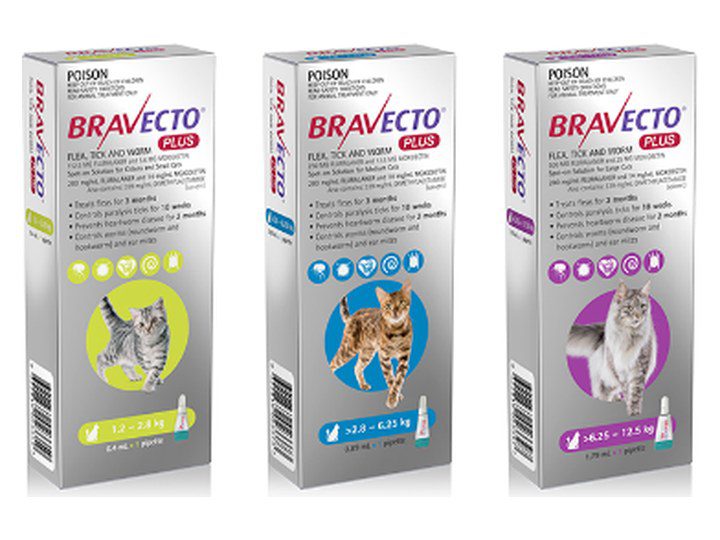
Every 2 months
Bravecto Plus
Spot On
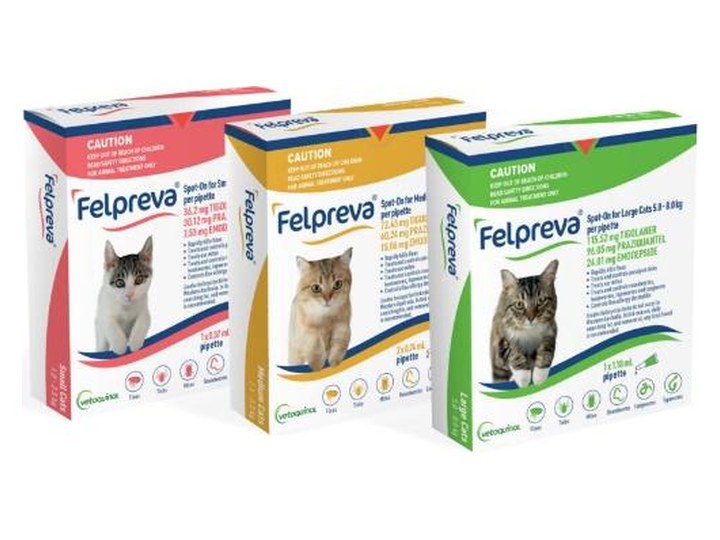
Every 3 months
Felpreva
Top Spot
Also, if your pet has a long or thick coat, clipping them short for the summer months makes searching for ticks that much easier.
If you find a tick on your pet
Suppose you’ve found a tick on your pet (remember, if one is found always look for more). Do not start dabbing at it with methylated spirits, Vaseline, etc. All that is going to do is further irritate the tick and burn the animal’s skin as well. Grab the tick firmly at the point of attachment next to the skin with your fingers or a pair of tweezers and pull the tick out. If the body of the tick breaks off leaving the head behind in the skin, do not worry, the tick has been killed and there will only be a slightly prolonged irritation at the site of attachment. This is another time for close observation.
If your pet is not showing any symptoms (remember symptoms can occur for up to 4 days after you have removed the tick), keep them cool, quiet and for the first eight hours withhold food, water and any medication.
Symptoms of tick paralysis
If your pet develops any of the following symptoms, contact your vet team now!
- Change in the sound of voice or loss of voice
- Hind limb incoordination and weakness (wobbly or weak hind legs)
- Change in breathing rhythm, rate, depth and effort
- Gagging, grunting or coughing
- Regurgitation, vomiting or retching
- Dilated pupils
No vet will mind a phone call. Let them ascertain whether you should bring your pet in for treatment. It’s far better to err on the early side, apart from the fact that your pet stands a much better chance of survival. Advanced cases of tick paralysis need a lot of other supportive therapy as well.
Why keep your pet cool and quiet?
As the tick poison circulates the body, there is a gradual paralysis. If your pet becomes upset, too hot or you take them for a walk to see if they become wobbly, you will aggravate the condition. This causes more distress and exhaustion, which in turn further aggravates the problems. If you have to transport your pet to the vet, be calm, keep them cool and generally keep them as quiet as possible.
Most animals die of paralysis of the respiratory muscles, hence the emphasis on helping the breathing. However, some animals die from a tick toxin induced pneumonia, which can be caused by two things:
- Exposure: Cats can have a tendency of crawling off somewhere when they are ill. It rains during the night, the paralysis worsens and without shelter your pet is severely stressed by chilling, leading to pneumonia.
- Why food and water must be withheld if you suspect tick poisoning: the larynx is not operating as it should due to the tick toxin, so the chances of stomach contents being vomited up and inhaled into the lungs by accident is a very real risk. When this happens a bacterial infection usually occurs: pneumonia again.
Commonly asked questions
To finish up, here are a few answers to some commonly asked questions:
- No breed or crossbreed of dog or cat is more immune than any other is. All are equally susceptible.
- The age of the animal does not make any difference; all are equally vulnerable. However, the young and the elderly do have a higher mortality rate.
- At the beginning of the season, ticks do appear to have greater toxicity; therefore, the death rate is higher.
- Toward the end of the summer months as you continue to remove ticks from your pets, it is possible that they may have built up some immunity, but don’t rely on it! Immunity will lapse during the winter months when there are few ticks about, leaving your pet just as vulnerable when the new tick season starts.
- The main tick season generally runs from September to April; however, ticks can be found all year in Sydney.
The paralysis tick life cycle

The adult lays eggs that hatch into tiny pin-head size larvae. These larvae attach to a suitable animal (the host), suck blood, fall off when full, moult and develop into a nymph. The nymph, like the larvae, then repeats the process and finally develops into the adult tick. The adult then attaches itself to a host, feeds until engorged, falls off and lays 2000 to 3000 eggs, which hatch into larvae and so complete the life cycle.
The paralysis toxin which the tick produces comes from the salivary glands of the adult female tick and paralysis occurs progressively; that is, the more engorged the tick, the more toxin it produces, which in turn produces more paralysis.
Quick tick check
- 1 Check signs
- 2 Remove
- 3 Watch
Found a tick on your pet?
Before anything else, look for these signs. Tick the ones you can see right now.
Not sure? No vet will mind a phone call. Mona Vale Veterinary Hospital: (02) 9999 2269
Call your vet now.
Don’t wait to see if it gets worse. It is far better to call early, and your pet stands a much better chance.
Mona Vale Veterinary Hospital(02) 9999 2269Until you’re on your way
- Keep them cool and quiet. Don’t walk them to see if they wobble. Stress and heat make the paralysis worse.
- No food, water or medication. Tick poison stops the larynx working properly, so vomit can be breathed into the lungs and cause pneumonia.
- Drive calmly. Keep them cool and as quiet as possible on the way to the vet.
Take the tick out
No signs right now. Remove the tick, then check for more.
- Skip the home remedies Don’t dab it with methylated spirits, Vaseline or similar. It only irritates the tick and burns your pet’s skin.
- Pull it out Grab the tick firmly where it meets the skin, with your fingers or tweezers, and pull it out.
- If the head stays in Don’t worry. The tick is dead and you’ll only see slightly prolonged irritation there. Watch your pet closely.
Now look for more
If you’ve found one, always look for more. Run your fingers over every square inch of your pet. Ticks, even large ones, are easily missed, so the more family members who check, the better.
0 of 7 areas checked
Watch closely for 4 days
Signs can appear for up to 4 days after the tick is out.
Keep your pet cool and quiet. Hold back food, water and any medication.
- A change in voice, or loss of voice
- Wobbly or weak hind legs
- A change in breathing
- Gagging, grunting or coughing
- Vomiting, regurgitating or retching
- Dilated pupils
Tick prevention products are essential. Ticks can be found all year in Sydney, and the main season runs from September to April.
Based on our tick paralysis information sheet. This quick guide doesn’t replace advice from your vet. If you’re unsure, call us.
